


A well-planned office does more than hold a desk and a chair. It shapes how you focus, how long you stay comfortable and how clients see your business. These office setup ideas will help you create a workspace that feels calm, organised and built for the way you work.
Plan around how you work
Start with your daily routine rather than a catalogue. Think about the tasks you do most, how often you meet people, and what needs to be within arm’s reach. A layout that follows your workflow saves time every day and keeps the room from feeling crowded.
Place the desk where natural light falls from the side, keep walkways clear, and give meetings, focused work and storage their own zones. Even a compact office feels larger when each area has a clear purpose.
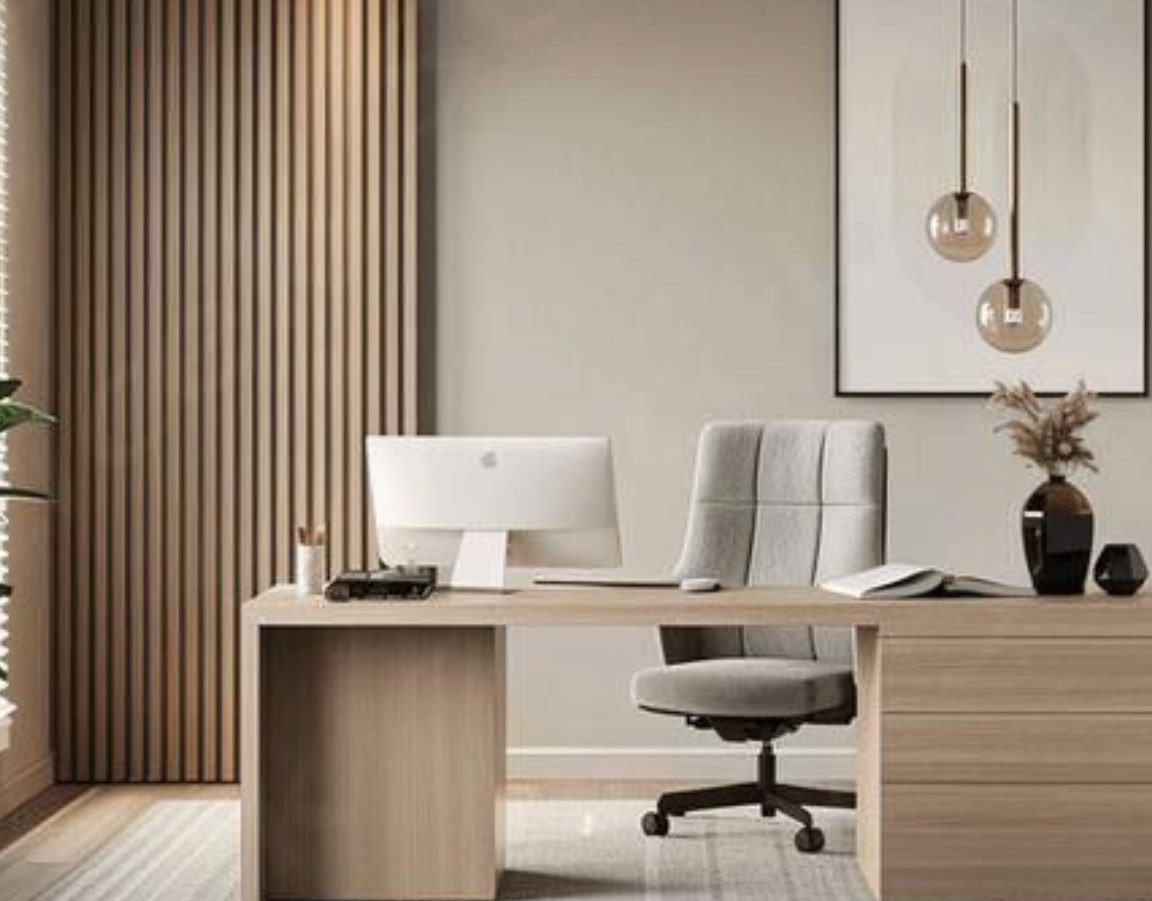
Choose ergonomic furniture first
Comfort is the foundation of a productive workspace. A supportive chair, a desk at the right height and a screen at eye level prevent fatigue far more than any décor choice. Invest in these pieces first and build the rest of the room around them.
- Choose a chair with adjustable height, lumbar support and armrests that sit level with the desk.
- Allow enough desk depth to keep the screen an arm’s length away.
- Keep everyday items within easy reach to avoid constant stretching and twisting.
- Add a footrest or a sit-stand desk if you spend long hours at work.
Use light and materials to set the mood
Layered lighting makes an office comfortable from morning to evening. Combine daylight with soft ambient light and a focused task lamp, and avoid placing screens directly opposite windows. Warm wood, textured wall panels and natural fabrics balance the hard surfaces of technology and make the room feel welcoming.
- Use warm, neutral tones on walls to keep the space calm and focused.
- Add timber panels or slatted walls for warmth and better acoustics.
- Choose matte finishes on desks to reduce glare.
- Bring in plants to soften the space and improve the atmosphere.
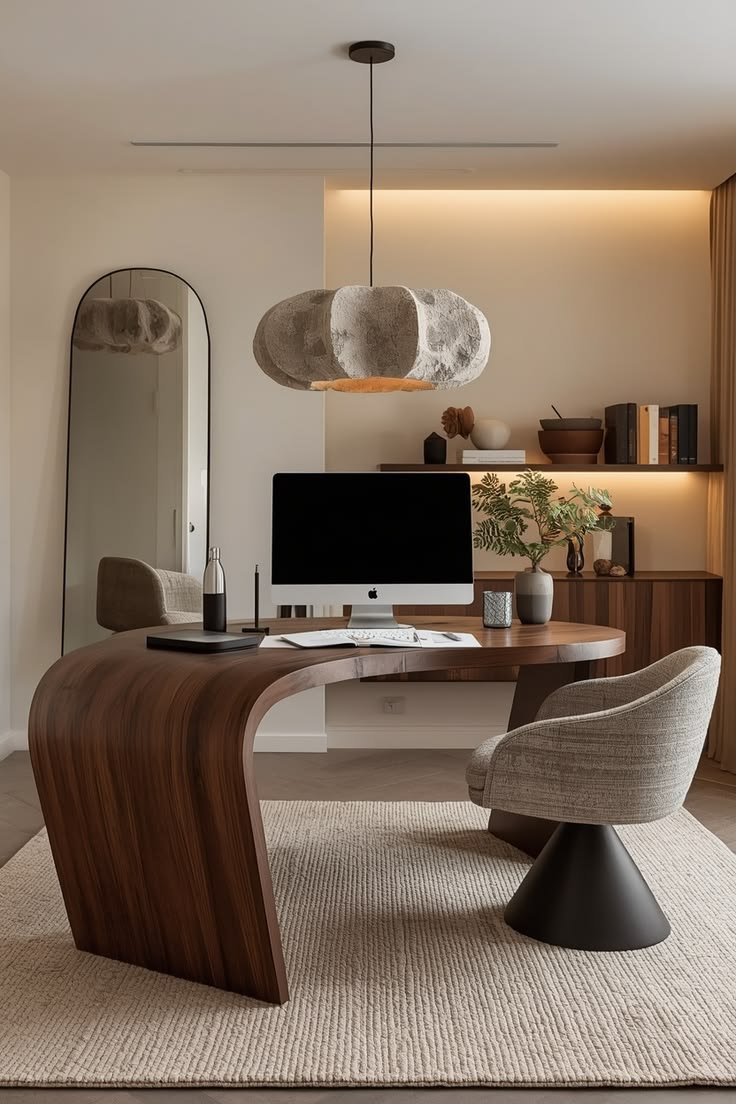
In shared offices, furniture can define zones without building walls. Storage units, low shelving and rugs separate work, meeting and lounge areas while keeping the space open and connected.
Keep storage simple and hidden
Clutter is the quickest way to make an office feel stressful. Built-in cabinets, closed drawers and cable management keep surfaces clear and let the furniture stand out. Plan storage for what you use every day near the desk, and move archives and supplies further away.
Add character with intention
A few personal touches make an office feel like yours. Choose one statement piece, such as a sculptural pendant, a piece of art or a striking chair, and keep the rest of the room quiet around it.
- Limit accessories to a few objects that mean something to you.
- Repeat one or two materials across furniture and décor for a cohesive look.
- Use artwork to anchor the wall behind the desk.
- Leave some empty space so the room can breathe.


